
Alberta and Calgary Real Estate Investment Guide: Unlocking Opportunities Through a Global Real Estate Network in Calgary, Canada
For international property investors and cross-border real estate agents looking for high-yielding, resilient, and affordable North American real estate, Alberta presents one of the most compelling economic landscapes today. While major metropolitan centers like Vancouver and Toronto struggle with extreme housing affordability challenges and over-saturation, the cities of Calgary and Edmonton offer a vastly different narrative. Driven by energy sector stability, high median family incomes, and expandable land reserves, real estate investors in Alberta and Calgary, Canada are positioned to capture sustainable long-term cash flow and capital appreciation.
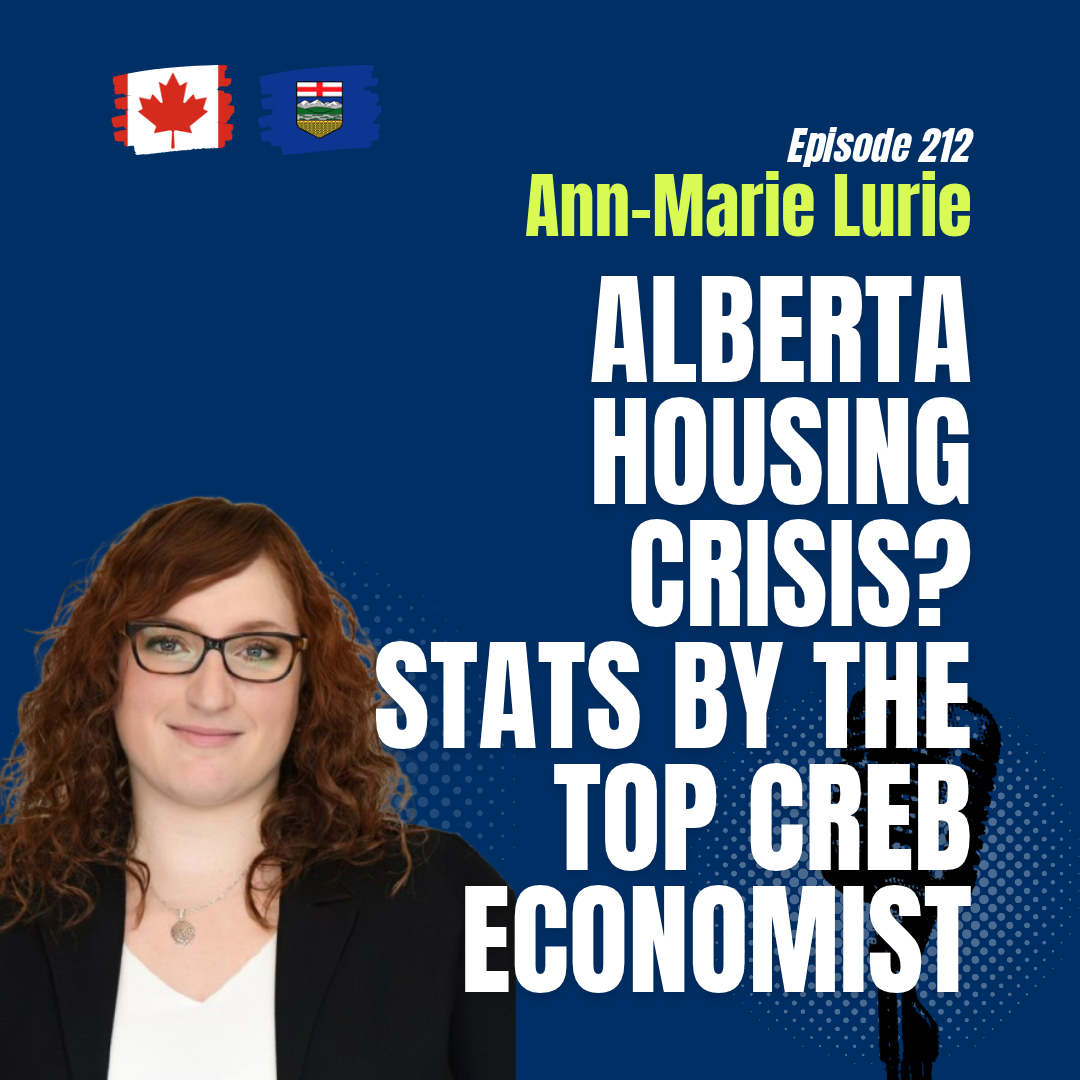
In this comprehensive analytical guide, we draw directly from an exclusive in-depth interview with Ann-Marie Lurie, Chief Economist at the Calgary Real Estate Board (CREB®). We break down macroeconomic indicators, property segment performance, rental yield dynamics, immigration policy shifts, and strategic blueprints for agents expanding their global real estate network Calgary, Canada footprint.
Quick Answers for Global Real Estate Investors and Agents
Is Calgary, Canada a good market for global real estate investors right now? Yes. Calgary and Edmonton represent a highly stable, high-income market sheltered from broader national economic shocks. Unlike Toronto or Vancouver where housing costs exceed 40% to 50% of median family income, Alberta maintains a healthy shelter-to-income ratio of 25% to 30%. With median family incomes exceeding $100,000 CAD per year and a strong employment foundation, rental demand remains robust while entry price points remain accessible.
How are federal immigration changes impacting Alberta rental rates and housing supply? Following three years of record international migration that drove rental growth up nearly 20% annually, recent federal policy adjustments scaling back international migration have allowed market supply to catch up. Rental asking prices in Calgary have stabilized around $2,000 CAD per month for a two-bedroom apartment, creating a balanced, predictable environment for buy-to-let investors.
Why should international real estate agents build a global real estate network in Calgary, Canada? International buyers seeking stable North American assets increasingly turn to Alberta due to its tax advantages (no provincial sales tax or land transfer tax), lower purchase price per square foot, and favorable rental yields. Connecting into a global real estate network in Calgary, Canada enables agents worldwide to facilitate cross-border capital flow, represent outbound Canadian buyers, and present high-cap-rate residential opportunities to global clients.
Table of Contents
- 1\. The Macroeconomic Foundation: Why Alberta Stands Apart from National Trends
- 2\. High Median Incomes and Healthy Rental Ratios
- 3\. Calgary vs. Edmonton Asset Class Deep-Dive: Detached Homes vs. Condos
- 4\. Navigating Federal Immigration Policy Shifts and Supply Adjustments
- 5\. The Agent’s Playbook: Leveraging a Global Real Estate Network in Calgary, Canada
- 6\. Urban Growth, Transit-Oriented Development (TOD), and 3 Million Population Planning
- 7\. Watch the Full Interview with CREB® Chief Economist Ann-Marie Lurie
- 8\. Frequently Asked Questions (FAQ) for Investors and Agents
1\. The Macroeconomic Foundation: Why Alberta Stands Apart from National Trends
When evaluating North American property markets, international investors often make the mistake of treating Canada as a single, homogenous real estate landscape. However, economic fundamentals vary significantly across provinces. As Ann-Marie Lurie, Chief Economist at the Calgary Real Estate Board (CREB®), points out, Alberta operates under distinct macroeconomic conditions that shelter it from national trade uncertainties and manufacturing slowdowns.
Alberta’s economy remains closely anchored to energy sector performance, including oil and natural gas prices. Because global energy demand has remained resilient and the sector has weathered recent global trade tensions far better than manufacturing-heavy provinces, Alberta has maintained positive employment momentum. For real estate investors in Alberta and Calgary, Canada, this employment stability provides a reliable floor for tenant occupancy and mortgage performance.
Furthermore, Alberta does not suffer from geographic land barriers. Cities like Vancouver are hemmed in by oceans and mountains, while Toronto faces restrictive land-use boundaries. Calgary and Edmonton retain significant surrounding land reserves, allowing housing construction to expand responsively when demand surges. This structural elasticity prevents the extreme structural price bubbles seen elsewhere in Canada while guaranteeing sustainable, long-term urban growth.
2\. High Median Incomes and Healthy Rental Ratios
Affordability is not simply a function of property prices; it is determined by the ratio of housing costs to local earning power. Alberta leads all Canadian provinces in median family income, which comfortably exceeds $100,000 CAD annually. This elevated income baseline creates an exceptionally strong economic foundation for residential real estate investments.
In global gateway cities—such as London, New York, Vancouver, or Toronto—tenants and homeowners routinely allocate 40% to 50% or more of their gross income toward shelter. In Calgary and Edmonton, average rental costs account for approximately 25% to 30% of median household earnings. This healthier ratio leaves tenants with greater disposable income, reduces default risks for landlords, and allows first-time buyers to accumulate down payments more effectively.
For international property portfolios, acquiring assets in a high-income, moderate-cost jurisdiction represents an optimal balance between capital security and cash flow generation. Establishing a strategic connection with a global real estate network Calgary, Canada allows wealth managers and foreign investors to capitalize on these cash-flowing residential opportunities before wider global markets price them out.
3\. Calgary vs. Edmonton Asset Class Deep-Dive: Detached Homes vs. Condos
Understanding property type dynamics is essential when deploying capital into Western Canada. The Alberta market is divided into distinct housing categories, each exhibiting unique supply, demand, and pricing characteristics across Calgary and Edmonton.
Detached Single-Family Homes
Detached homes represent the primary driver of market activity and local consumer preference in Alberta. In Calgary, the benchmark price for a detached home averages around $780,000 CAD, with entry-level options starting near the $600,000 CAD mark. In Edmonton, detached home pricing is even more accessible, with quality single-family properties available between $400,000 CAD and $500,000 CAD. Detached properties have demonstrated consistent price resilience due to sustained domestic buyer demand.
Semi-Detached and Row / Townhomes
Serving as an important middle-tier asset class, semi-detached properties in Calgary average around $600,000 CAD, while row and townhomes sit near $400,000 CAD. These multi-story attached formats appeal strongly to young families, working professionals, and long-term rental investors seeking high square-footage without single-family maintenance overhead.
Apartment Condominiums
Apartment-style condominiums represent the most accessible entry point for investors. Typical two-bedroom condos in Calgary trade between $300,000 CAD and $350,000 CAD, with select units available near $200,000 CAD. However, investors must analyze condo segment supply carefully. Rapid construction completions over recent years—combined with shifting international migration patterns—have created localized inventory expansion in the condo sector. Consequently, while single-family homes experience steady price growth, the condo resale market is currently undergoing price adjustments, offering attractive buying opportunities for patient, yield-focused investors.
4\. Navigating Federal Immigration Policy Shifts and Supply Adjustments
Between 2021 and 2024, Canada experienced unprecedented levels of international migration, welcoming over one million newcomers over a condensed timeframe. Because international migrants predominantly enter local housing markets through rental housing rather than immediate homeownership, rental vacancy rates across Calgary and Edmonton dropped sharply. This sudden demand surge triggered rapid rent increases of up to 20% annually.
In response to national housing capacity constraints, the federal government under Prime Minister Trudeau enacted policy changes to scale back international immigration and temporary resident visas. As Ann-Marie Lurie highlights, this policy shift has provided Alberta’s real estate market with vital breathing room.
Rather than signaling a market downturn, the reduction in international migration pace allows housing supply—particularly newly completed multi-family and rental developments—to absorb seamlessly into the market. Average asking rents for two-bedroom units in Calgary have stabilized around $2,000 CAD per month (with wood-frame units available closer to $1,800 CAD), while Edmonton offers two-bedroom rentals below $2,000 CAD. This transition toward market equilibrium protects investors from extreme volatility while establishing predictable, long-term yield projections.
5\. The Agent’s Playbook: Leveraging a Global Real Estate Network in Calgary, Canada
For real estate brokers and agents operating globally, Western Canada represents a lucrative referral and cross-border deal corridor. Integrating your business into a global real estate network Calgary, Canada framework unlocks key strategic advantages that elevate client representation and expand revenue streams.
Topic 1 for Agents: Educating Cross-Border Investors on Alberta’s Advantage
International clients are often fixated on headline news about Canadian housing restrictions or high prices in Ontario and British Columbia. Proactive agents can differentiate themselves by providing clear, data-driven comparisons that highlight Alberta's distinct advantages:
No Provincial Sales Tax (PST) or Land Transfer Tax in Alberta, saving buyers thousands in closing fees compared to Toronto or Vancouver.
Superior capitalization rates driven by low purchase-price-to-rent ratios.
Strong tenant quality supported by Western Canada’s high median family salaries.
Topic 2 for Agents: Utilizing CREB® Market Indicators to Guide Client Decisions
To establish credibility with institutional and high-net-worth clients, real estate agents must speak the language of economic forecasting. Ann-Marie Lurie emphasizes two key metrics every investment agent should track daily:
Months of Supply: Calculated by dividing active inventory by monthly sales volume. A low months-of-supply ratio indicates a seller's market with upward price pressure, whereas a rising ratio signals inventory accumulation and negotiation leverage for buyers.
Sales-to-New-Listings Ratio: Measures the proportion of incoming property listings being absorbed by buyers within a given timeframe, serving as an early indicator of future price movements before traditional benchmark prices reflect the shift.
By leveraging these indicators alongside a reliable global real estate network in Calgary, Canada, real estate professionals can position their clients ahead of market cycles, securing prime assets before broader market competition catches up.
6\. Urban Growth, Transit-Oriented Development (TOD), and 3 Million Population Planning
As Calgary prepares for its long-term vision of accommodating a population of 3 million residents (up from 1.7 million today), municipal planning and infrastructure investment will dictate where the highest capital appreciation occurs.
Historically reliant on private automobile ownership, Calgary is actively expanding Transit-Oriented Development (TOD) corridors and light rail transit (LRT) networks. Ann-Marie Lurie advocates strongly for aggressive transit infrastructure spending, emphasizing that rapid transit corridors unlock peripheral land reserves, enabling affordable high-density residential development without sacrificing urban connectivity.
Investors and agents should focus acquisition strategies around designated transit corridors, urban infill zones, and surrounding commuter municipalities. Properties positioned along major transportation arteries offer enhanced tenant retention, lower vacancy rates, and superior long-term appreciation as density policies evolve.
7\. Watch the Full Interview with CREB® Chief Economist Ann-Marie Lurie
Gain deeper insights directly from the source. Watch the complete podcast interview hosted by HalloCasa featuring Ann-Marie Lurie as she explores statistical modeling, energy sector correlations, and policy forecasts for Alberta's housing market.
To connect directly with the featured expert and learn more about regional economic data, visit the following official resources:
Connect with Ann-Marie Lurie on LinkedIn
Visit the Official Calgary Real Estate Board (CREB®) Website
Watch the Original Calgary Housing Market Podcast Interview on YouTube
8\. Frequently Asked Questions (FAQ) for Investors and Agents
What makes real estate investors in Alberta and Calgary, Canada uniquely positioned compared to other markets?
Real estate investors in Alberta and Calgary, Canada benefit from a rare combination of economic factors: Canada's highest provincial median family incomes, an energy-resilient local economy, lower entry property prices, and an absence of provincial land transfer taxes. This creates favorable cash flow dynamics and lower financial entry barriers compared to Vancouver or Toronto.
How does a global real estate network in Calgary, Canada benefit international buyers?
A global real estate network in Calgary, Canada connects international buyers, wealth managers, and cross-border real estate agents directly with verified local market specialists. This network facilitates seamless foreign acquisitions, provides access to localized MLS market intelligence, and ensures compliance with Canadian property regulations.
What is the average price of a home in Calgary vs. Edmonton?
In Calgary, the average benchmark price for a detached single-family home is approximately $780,000 CAD, semi-detached homes average $600,000 CAD, townhomes average $400,000 CAD, and apartment condos range between $300,000 CAD and $350,000 CAD. Edmonton offers even greater affordability, with detached homes typically ranging between $400,000 CAD and $500,000 CAD and condos available under $200,000 CAD.
How much down payment is required to purchase residential real estate in Alberta?
For primary residents and first-time buyers qualifying under government-backed programs (such as CMHC insurance), down payments can be as low as 5% for properties under $500,000 CAD. For non-resident international investors, traditional lenders typically require a down payment ranging between 20% and 35%, depending on income qualification and asset evaluation.
How are rental prices trending in Calgary and Edmonton?
After experiencing annual rent growth near 20% during peak migration periods, rental prices have stabilized. Average asking rents for a two-bedroom apartment in Calgary hover around $2,000 CAD per month, while Edmonton averages below $2,000 CAD per month. Increased multi-family completions and moderated migration flows have created a healthier, more sustainable rental market balance.
Are there rent control restrictions in Alberta?
No. Alberta does not impose strict rent control caps, allowing landlords to adjust rents to market rates upon lease renewals (subject to provincial timing guidelines). This policy encourages private rental development, ensures strong landlord rights, and maintains healthy rental inventory growth across the province.