
Mastering the Horizon: The Strategic Guide to Investing with a Real Estate Expert in Tokyo, Japan
For global investors and brokers, the Japanese market has long been a land of enigma and opportunity. While much of the Western world grapples with volatile interest rates and housing shortages, Japan stands as a unique outlier, offering a blend of stability, cultural nuance, and untapped potential. To navigate this complex landscape, one must look toward a real estate expert Tokyo Japan who understands not just the numbers, but the strategic architecture of the market itself.
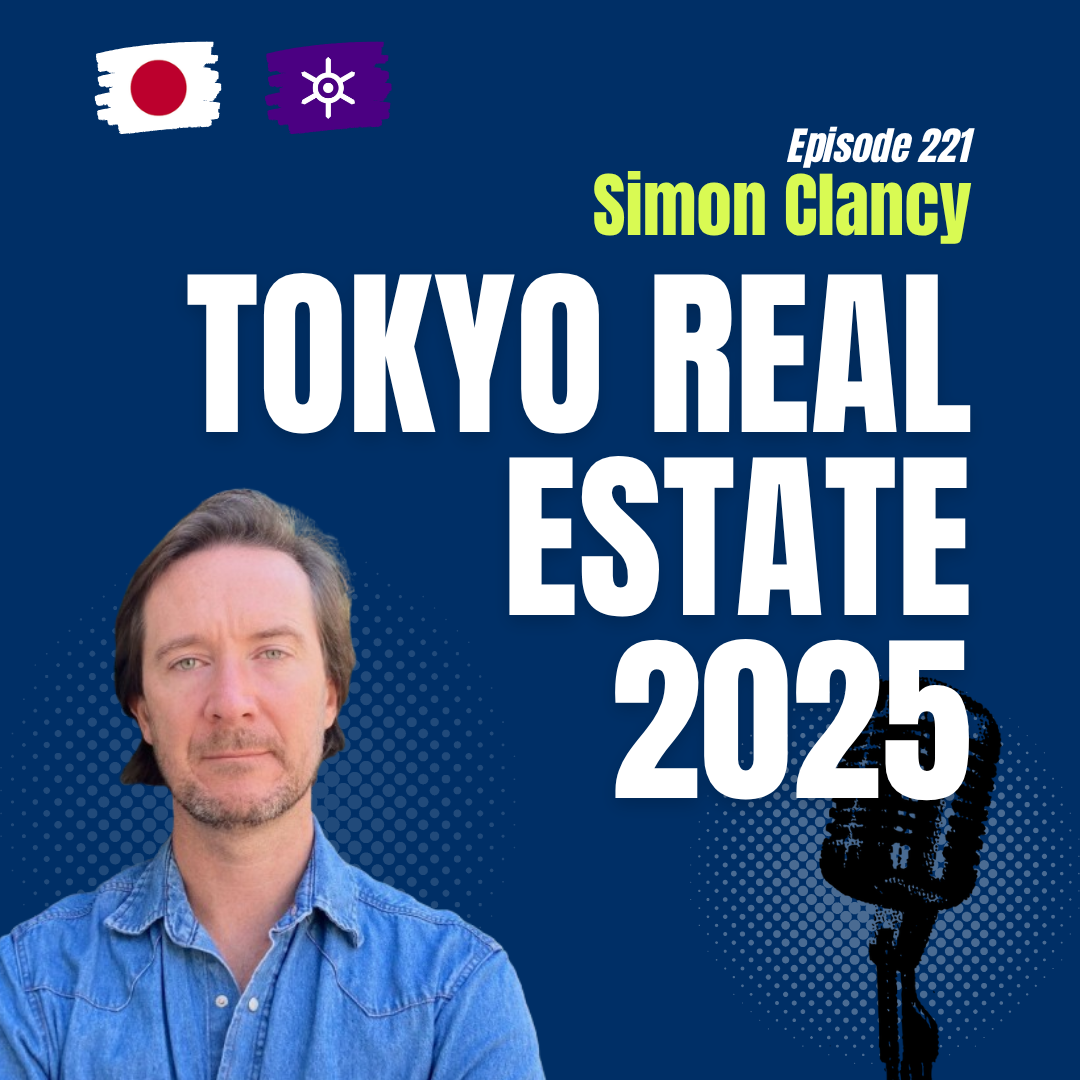
In this comprehensive analysis, we draw upon the insights of Simon Clancy, founder of Consortium Property Group Asia. With over 20 years of experience spanning Tokyo, Shanghai, and Singapore, Clancy provides a masterclass in how to bridge the gap between institutional capital and the deeply traditional Japanese property sector.
Table of Contents
- The Strategic Architect: Who is Simon Clancy?
- Decoding the Tokyo Market Dynamics
- Residential Real Estate: The Social Right vs. The Investment Asset
- Commercial Investment: The 99% Off-Market Reality
- For Real Estate Agents: The Art of the Japanese 'Process'
- Economic Outlooks: Inflation, Debt, and the Yen Factor
- Legal and Visa Realities: Beyond the 'Akiya' Myth
- The Future of Tokyo Real Estate (2026 and Beyond)
- Contact a Real Estate Expert Tokyo Japan
The Strategic Architect: Who is Simon Clancy?
Success in Japan requires more than just a brokerage license; it requires a toolkit of strategic thinking, design, and influence. Simon Clancy has spent two decades refining this toolkit. As the CEO of Consortium Property Group Asia, he connects private wealth and institutional investors to high-value offshore and domestic opportunities.
Clancy’s approach is modular and collaborative, acting as a "consortium" that brings together architects, master planners from Italy, and legal experts to de-risk complex deals. His background in design and consultancy allows him to view real estate through the lens of "placemaking"—creating value not just in the asset, but in the region and community it inhabits.
Decoding the Tokyo Market Dynamics
Tokyo is a humongous metropolitan area with roughly 40 million inhabitants. Despite its size, the city is structured around a high-density geography, largely because 85% of Japan's main island is comprised of mountains and forests, making construction in those areas unfeasible.
The heart of the market lies in the "C5"—the central five wards of Tokyo: Minato, Chiyoda, Chuo, Shibuya, and Shinjuku. These areas command premium prices for both residential and commercial stock. However, the Greater Tokyo Bay area also includes massive satellite cities like Yokohama, which houses 8 million people and serves as a major hub for commuters who travel 30 minutes by express train into the city center.
Residential Real Estate: The Social Right vs. The Investment Asset
One of the most striking aspects of the Japanese market for a real estate expert Tokyo Japan to explain is the "unwritten social contract" regarding housing. In Japan, housing is often viewed more as a social right than a property right.
The Landlord-Tenant Harmony
Unlike the aggressive rental hikes seen in cities like Berlin or Zurich, Japanese landlords rarely increase rent on existing tenants. This creates a "harmonic society" but also means that rental yields are often stable and modest, typically ranging from 2% to 3% in central Tokyo.
For investors seeking higher cash flow, secondary markets like Hokkaido can offer yields of 8% to 10%, though these come with a higher risk profile and more volatile tenancy.
Commercial Investment: The 99% Off-Market Reality
For institutional investors, the real "gold" in Japan is found in commercial real estate. However, accessing these deals is notoriously difficult. Clancy notes that 99% of commercial real estate in Japan is "off-market"—it is never advertised or self-promoted.
The Importance of Direct Networks
Deals are secured through deep, trusted relationships with asset managers and owners. A foreign investor entering the market often finds themselves four or five steps removed from the actual owner, which creates friction and misinformation. A true real estate expert Tokyo Japan acts as the bridge, providing direct access and clear, analytical property reports that meet Western standards of due diligence while respecting Japanese protocols.
Transaction Structures: Freehold vs. Rights Transfer
In massive deals—ranging from $30 million to over $500 million—the structure is often a "rights transfer" rather than a simple freehold title. The land title remains with the original owner, while the investor leases the use of the building and asset for a specified period, generating yield through rental returns and favorable local borrowing.
For Real Estate Agents: The Art of the Japanese 'Process'
This section is vital for real estate agents looking to collaborate on Japanese deals. The "cultural clash" between Western logic and Japanese process is where most deals fail.
Topic 1: Moving Beyond 'Logos' and 'Logic'
Western education systems emphasize "logos"—steps, procedures, and legality to reach a quick result. In Japan, the emphasis is on consensus building and exhaustive due diligence. A commercial deal that might take two months in Europe could take a full year in Japan. During this time, it may look as if nothing is happening, but in reality, the parties are meticulously aligning. Agents must learn to "fit in" to this hierarchy and accept the timeline to succeed.
Topic 2: The Credibility of the Bid
In many global markets, the highest bidder wins. In Japan, bidding above the asking price can actually be a "turnoff". Owners are cautious; they look for a track record and a long-term commitment to the market. They want to know who is buying their legacy, not just how much they are paying.
Economic Outlooks: Inflation, Debt, and the Yen Factor
Japan is currently a "stability market," not a high-growth market. While the US and other regions face high interest rates (8-10%), Japan has maintained historically low, and even negative, interest rates.
Two factors keep these rates low:
- The Debt-to-GDP Ratio: At approximately 260%, the government cannot afford to raise rates without catastrophic fiscal consequences.
- The Voting Demographic: With a majority of voters aged 50 to 90, there is a strong political desire to keep the cost of living flat and pensions secure.
For the foreign investor, the "yen trade" and currency arbitrage have been major drivers. Borrowing locally at low rates while the yen is depreciated offers a significant cap rate advantage, provided the investor has the "permanent residency" status required to secure Japanese financing.
Legal and Visa Realities: Beyond the 'Akiya' Myth
Social media has recently glamorized the "Akiya" (abandoned home) market, with influencers suggesting foreigners can buy cheap homes for $30,000 and gain residency. A real estate expert Tokyo Japan will tell you this is largely a myth.
Buying property in Japan does not grant residency or a visa. Furthermore, many of these homes come with hidden debt, outstanding building taxes, and are located in areas with no rental demand.
New Visa Laws (October 2026)
Japan is "drawing a line in the sand" regarding immigration and business manager visas. Starting in late 2026, requirements are expected to tighten significantly:
- The investment threshold for business-related visas is rising to approximately 30 million yen (~$260,000).
- Investors must hire at least two local Japanese staff.
- There will be stricter cash flow requirements and potential language requirements.
The Future of Tokyo Real Estate (2026 and Beyond)
We are entering a period of "cycling" in the commercial sector. Investors who entered the market 3-5 years ago for currency arbitrage may begin to exit, opening doors for long-term fundamental investors. We are also seeing a massive push in reshoring tech, with labor and capital being prioritized for chip plants and data storage facilities.
In the hospitality sector, demand for talent and resources remains high, particularly in regions like Niseko, which is transitioning from a "winter resort" to a "year-round region".
Work with a Real Estate Expert Tokyo Japan
Navigating the Japanese market requires a partner who understands the nuance of the "place" and the "process". Whether you are looking for off-market commercial acquisitions or strategic project marketing for a new development, Simon Clancy and Consortium Property Group Asia provide the modular, expert guidance needed to succeed in Asia's most stable market.
Watch the full interview with Simon Clancy:

Connect with Simon Clancy:
For inquiries regarding commercial real estate, strategic advisory, or project marketing in Tokyo and beyond, visit: Simon Clancy's Hallocasa Profile.
Disclaimer: This article is based on source materials and interview transcripts. Real estate investment involves risk, and local laws/regulations are subject to change. Always consult with a licensed professional before making investment decisions.