
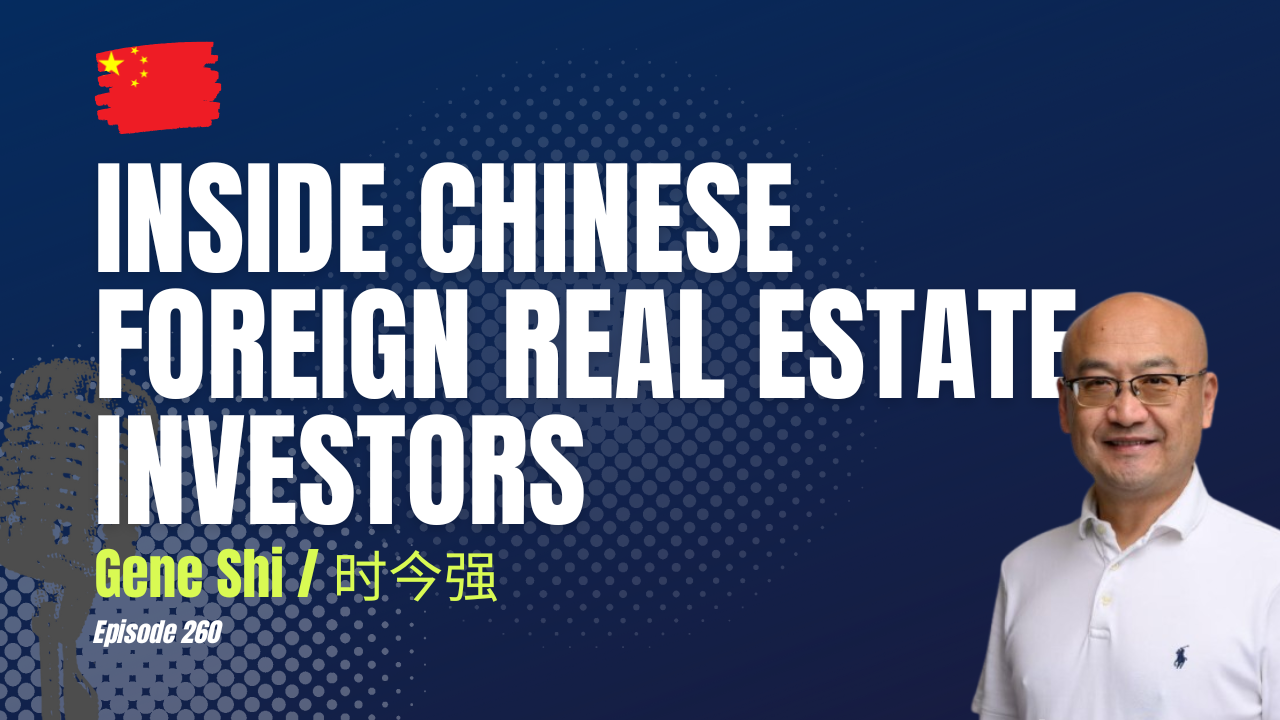
Unlocking the Dragon: How Global Real Estate Agents Can Master the Chinese International Market
For the modern real estate agent, the term "globalisation" isn't just a buzzword; it is the cornerstone of a high-growth career. Among the most influential forces in this global shift is the Chinese international buyer. In an era where a single platform can generate over 1,000 qualified leads every calendar day for overseas properties, understanding this demographic is no longer optional—it is essential.
In this comprehensive guide, we draw on insights from Gene Shi, President of International Operations at the China Alliance of Real Estate Agencies (CAREA), to help you navigate the complexities of the Chinese real estate landscape. Whether you are based in London, Dubai, or Sydney, these insights will transform how you capture and convert high-net-worth leads from the East.
Table of Contents
- Understanding the Three Pillars of Chinese Buyers
- Branding and Trust: Why the Organisation Trumps the Individual
- The AI Revolution in Real Estate Funnels
- Geographic Trends: Where is the Money Moving?
- Navigating Risks: From Fund Supervision to Registration Gaps
- The MLS Debate: Culture Over Technology
- Conclusion: Preparing for the Future
Understanding the Three Pillars of Chinese Buyers
To effectively market to Chinese clients, real estate agents must move beyond a "one-size-fits-all" approach. Gene Shi identifies two primary types of buyers: Type A, who act like local buyers and possess the connections to navigate markets independently, and Type B, who rely heavily on trusted Chinese agencies due to a lack of local expertise.
Furthermore, these buyers generally fall into three distinct psychographic categories:
1. The Portfolio Investor
Representing roughly 30% of the market, these individuals are driven by Return on Investment (ROI) and capital structure. They look for specific indicators, such as commercial properties in the US with cap rates of 6% or higher, or student residential units in the UK and Japan.
2. Education and Lifestyle Seekers
Accounting for about 40% of leads, this group buys properties to support their children's education. Proximity to prestigious junior or senior high schools is a major driver, as local residency is often required for enrolment. Others in this category seek "vacation homes" in locations like Hawaii or Florida to enjoy a specific lifestyle.
3. The Immigration-Driven Buyer
This segment focuses on residency and passport programmes, such as the "Golden Visa" in Dubai or similar schemes in Turkey and Japan. Their primary goal is to convert a property investment into long-term legal residency.
Branding and Trust: Why the Organisation Trumps the Individual
One of the most profound differences between Western and Chinese real estate markets lies in the concept of trust. In Western societies, individualism is highly valued; clients often follow a specific agent regardless of their brokerage.
However, in China, the brand identity of the organisation is the top priority. Individuals are often seen as having less inherent credibility than the company they represent. For a global agent, this means that partnering with a reputable, large-scale brokerage or platform—like Lianjia (Beike), which at one point had 8,000 branches and 150,000 agents—is often more effective than building a purely personal brand when targeting this market.
The AI Revolution in Real Estate Funnels
As a real estate agent, your time is your most valuable asset. The sources reveal that the future of lead conversion lies in Vertical Large Language Models (LLMs) and AI Agents.
Gene Shi highlights that AI can now manage the entire sales funnel—from initial interest to contract preparation—using Retrieval-Augmented Generation (RAG) to provide accurate, sophisticated responses to potential buyers. Even more impressive is the capacity for AI outbound calling, which can handle up to 50,000 calls per minute with voices so natural they are indistinguishable from real humans. For agents, adopting these technologies is the only way to stay competitive when dealing with the sheer volume of Chinese online traffic.
Geographic Trends: Where is the Money Moving?
While interest is global, the "Top Four" destinations—the US, Canada, the UK, and Japan—consistently represent 50% to 60% of Chinese buyer needs.
Key Trends to Watch:
The Middle East: Countries like the UAE have seen a surge in popularity due to attractive residency programmes.
The "Smile Curve": Contrary to popular belief, Chinese buyers do not always insist on living in established Chinese communities; they often prioritise ROI and specific education goals over living next door to friends.
Developed vs. Developing: Most Chinese investors remain conservative, preferring the stability of developed nations over the higher-risk returns of developing markets.
Navigating Risks: From Fund Supervision to Registration Gaps
Understanding the "pain points" of a Chinese buyer involves understanding the risks they face at home. In China, a lack of universal fund supervision can lead to agents absconding with earnest money.
Another significant risk is the registration gap. There is often a window of several hours between signing a contract and its official recording in government databases. During this time, the property could be frozen by a bank or the seller could incur liabilities that complicate the sale. Agents who can offer guaranteed titles or secure escrow services provide an immense level of comfort to buyers accustomed to these domestic loopholes.
The MLS Debate: Culture Over Technology
For many international agents, a Multiple Listing Service (MLS) is a standard tool. However, in China, the lack of a unified MLS means that large corporations effectively own all the listing data.
Gene Shi points out that implementing an MLS is not a technical challenge, but a cultural and stakeholder issue. In the US, the MLS grew from the "bottom up," based on a shared belief in how agents should behave and cooperate. For global agents, the lesson is clear: when working with Chinese partners, you are not just navigating a database; you are navigating a different philosophy of cooperation and information sharing.
Conclusion: Preparing for the Future
The scale of the Chinese international real estate market is staggering. With traffic for international properties representing only 3% of total domestic traffic in China, yet still generating thousands of leads daily, the growth potential is nearly limitless.
To succeed, real estate agents must:
1. Segment their approach based on ROI, education, or immigration goals.
2. Leverage AI technology to manage high-volume funnels efficiently.
3. Build institutional trust by aligning with strong brands.
4. Provide security through transparent fund supervision and title protection.
By mastering these elements, you don't just find a client; you open the door to a vast network of referral-based, high-net-worth investors ready to enter the global stage.