Beyond the Transaction: Why the Modern Real Estate Agent is a Community Architect
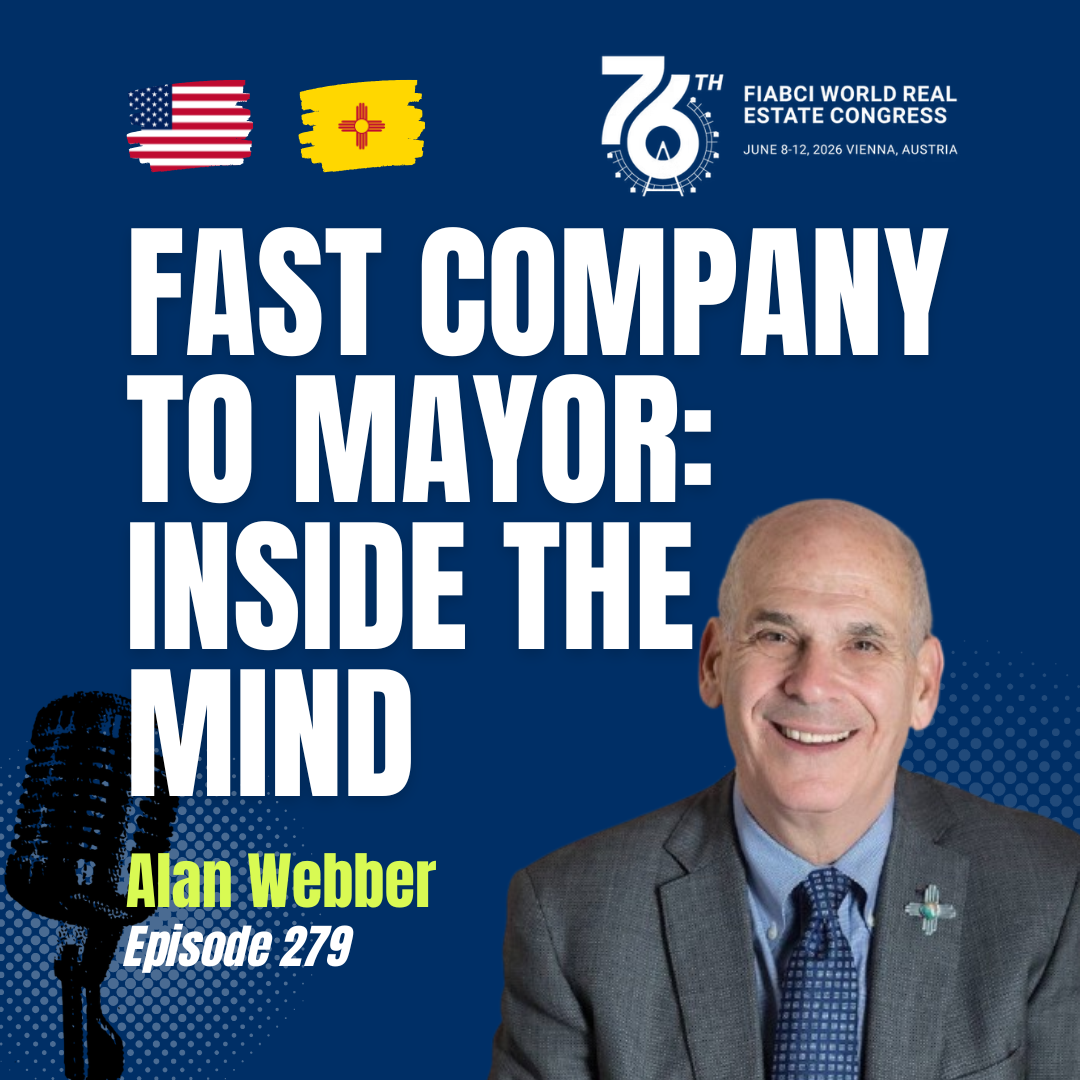
In an era of rapid digital transformation and global uncertainty, the role of a real estate agent has evolved far beyond simply closing deals. Today, the most successful professionals are those who understand that they are not just selling square footage; they are shaping the "sense of place" that defines our cities. Drawing from the profound insights of Alan Webber—the visionary co-founder of Fast Company, former editorial director of the Harvard Business Review, and the 43rd Mayor of Santa Fe—it is clear that the future of the industry lies at the intersection of innovation, leadership, and community development.
For agents looking to scale their business within a competitive international real estate network, the lesson is simple: to be a leader in the global real estate market, you must first be a champion for your local community. This article explores how agents can leverage entrepreneurial mindsets and "horizontal" thinking to build lasting success in an interconnected world.
Table of Contents
- 1. The "Sense of Place": Moving from Vertical to Horizontal Real Estate
- 2. Leveraging an International Real Estate Network in a Digitized World
- 3. Why Affordable Housing is the Foundation of a Healthy Market
- 4. The Agent’s Compass: Four Pillars of Professional Success
- 5. Conclusion: Leading Through Uncertainty
1. The "Sense of Place": Moving from Vertical to Horizontal Real Estate
Many professionals view real estate as a "vertical" industry—a siloed sector focused on development, investment, and sales. However, Alan Webber argues that real estate is actually a "horizontal" layer that touches every fundamental element of human life. It is the through-line that connects where people live to how a community feels and functions.
Cultivating Livability
To truly excel, agents must become students of "livability." Webber recalls his early education in Portland, Oregon, where he was influenced by Jane Jacobs’ seminal work, The Death and Life of Great American Cities. This perspective emphasizes that a city’s health depends on the confluence of values and substance. For a global real estate advisor, this means understanding that a property’s value is inextricably linked to the vibrancy of the surrounding neighborhood.
Key Takeaway for Agents: Don’t just sell a house; sell the ecosystem. Highlight the art, culture, food, and history that make a location unique. When you promote the "sense of place," you aren't just a salesperson; you are a community advocate.
2. Leveraging an International Real Estate Network in a Digitized World
We are living through a period of intense globalization. As Webber noted during his time in Japan and his leadership at Fast Company, the digitisation of everything has made the world smaller and more interconnected. For the modern agent, being part of a luxury international real estate network is no longer a luxury—it is a necessity for staying competitive.
The Power of Global Real Estate Marketing
Success in the international property network requires a "cross-cut" understanding of global trends. Webber highlights that knowledge is power in the new economy. Agents who can navigate different versions of capitalism and understand the nuances of international real estate investment will be better positioned to serve high-net-worth clients who move fluidly between Copenhagen, London, Singapore, and New York.
Furthermore, your international real estate marketing strategy should mirror the "edutainment" philosophy Webber used to launch Fast Company. Your content should be part education and part entertainment—informative, colorful, and full of the energy required to engage a modern, diverse workforce.
Building a "Mehi" (Business Identity)
In Japan, the mehi (business card) represents one's standing in the world. In the digital international real estate network, your brand is your mehi. It must convey character and substance to gain access to high-level conversations with entrepreneurs and investors.
3. Why Affordable Housing is the Foundation of a Healthy Market
It is easy for real estate professionals to focus solely on the high end of the market, but Webber warns that a community consisting only of the wealthy is unsustainable. As Mayor, he prioritized "housing, housing, and housing," because housing equals people.
The Sustainability of Diversity
A healthy city requires a diverse population—working-class families, seniors, and young entrepreneurs alike. When an international real estate network only caters to the "super-wealthy," the fabric of the community can be ripped apart, leading to feelings of exclusion and social instability.
The Strategic Advantage: Agents should champion inclusive communities. A city with a healthy mix of affordable and luxury options is the best long-term investment for everyone. By supporting policies like low-cost mortgages for first-time buyers and increased housing supply, agents help ensure a stable, thriving market for decades to come.
4. The Agent’s Compass: Four Pillars of Professional Success
Managing success as an entrepreneur—whether you are running a magazine or a real estate team—is just as difficult as managing failure. To navigate the "rocket ship ride" of a high-growth career, Webber suggests using a compass with four key points.
I. Gratitude
A sense of gratitude is essential for maintaining emotional stability. In the high-stakes world of real estate, acknowledging the mentors and teammates who help you succeed builds a culture of loyalty and "serious fun".
II. Respect
This includes respect for others' opinions, for nature, and for the unique role you play in the community. Agents who show genuine respect for the neighborhoods they serve will naturally build stronger real estate networking strategies.
III. Proportion
In a world consumed by the need for "more," agents must ask: "How much is enough?". Having a sense of proportion prevents you from sacrificing your values—or your personal life—for an abstract ideal of success.
IV. Purpose
Purpose is your "North Star". When you view your work as helping people find dignity and stability through housing, you move from being a transaction coordinator to being a leader.
5. Conclusion: Leading Through Uncertainty
We are currently in a moment of "great global anxiousness" where old assumptions no longer hold. In times like these, leadership cannot just come from the top; it must come from each of us.
As a real estate professional, you have a unique opportunity to be a force for positive change. By engaging with your international real estate network with authenticity and humor, and by viewing your local market as a horizontal community of interdependent people, you can navigate these uncertain times with confidence.
The message is clear: whether you are an entrepreneur or an agent, your best work happens when you act out of love and courage rather than fear. By following the "Rules of Thumb" laid out by visionaries like Alan Webber, you can build a career that is not only successful but truly meaningful.