The Rising Tide of Nigerian Real Estate: A Strategic Investment Guide for the Global Real Estate Network
For the savvy international investor and the forward-thinking broker, the map of global opportunity is shifting. While traditional markets in Europe may feel "flat" and steady, a dynamic, often misunderstood giant is awakening in West Africa. Lagos, Nigeria, is no longer just a regional hub; it is becoming a focal point for any professional global real estate network looking for high-alpha growth, massive demographic tailwinds, and unprecedented infrastructure development.
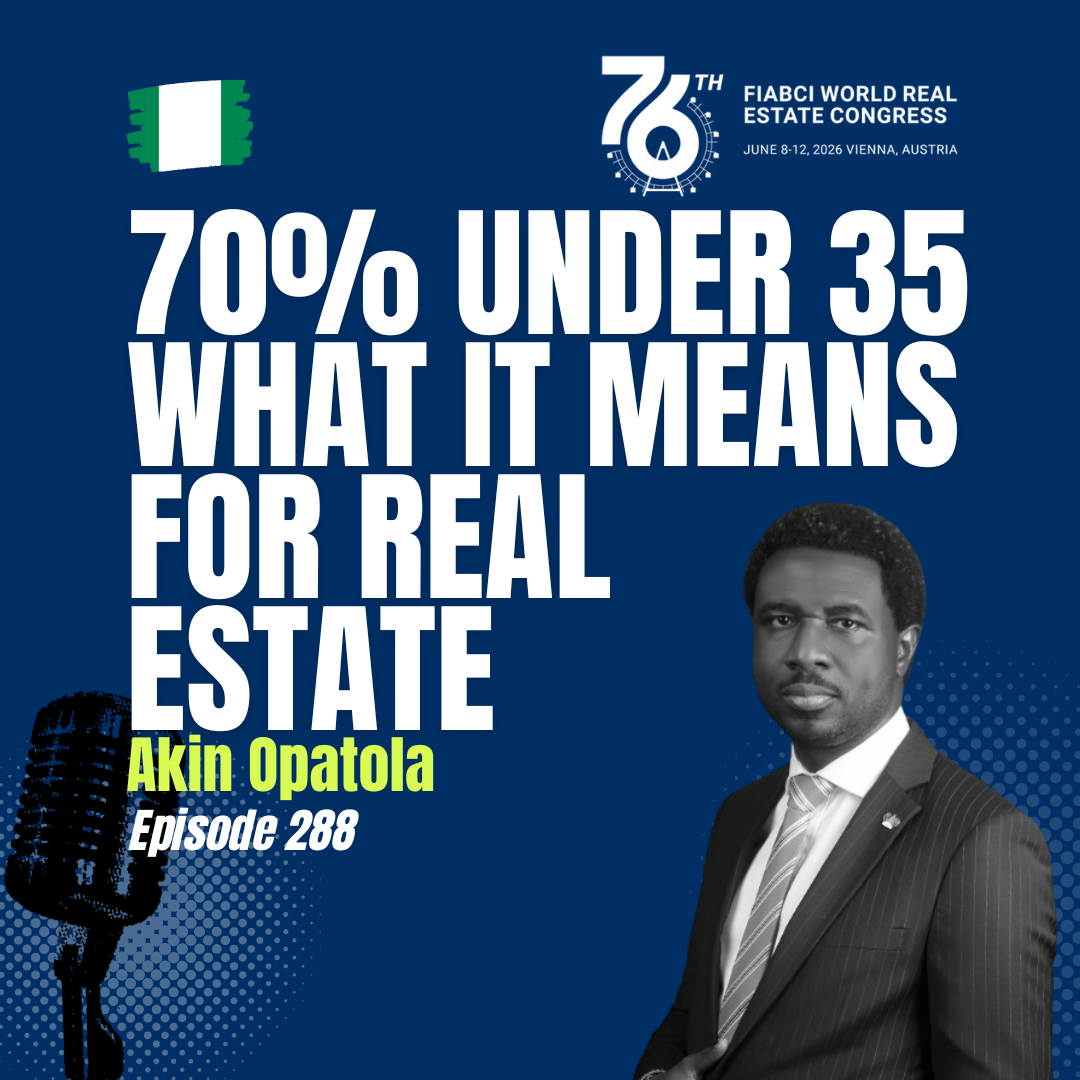
In this comprehensive guide, we draw on the insights of Akin Opatola—a Chartered Surveyor, property valuer, and President of FIABCI Nigeria—to explore how members of the global real estate network can navigate and profit from the "Rising Tide" of the Nigerian property market.
Table of Contents
- Leveraging a Trusted Global Real Estate Network
- The Demographic Goldmine: Why Youth Drives Value
- Infrastructure: The Lifeblood of Lagosian Growth
- The Ultra-Luxury Frontier: From Ikoyi to Eko Atlantic
- The "Detty December" Phenomenon and Short-Term Rentals
- Navigating the Murky Waters: Titles, Law, and Ethics
- The Boutique Broker Strategy: Client-Centricity in a Digital Age
- Conclusion: Positioning for the $1 Trillion Economy
Leveraging a Trusted Global Real Estate Network
Success in emerging markets is rarely a solo endeavor. Akin Opatola emphasizes that the global real estate network is the primary bridge between local opportunity and international capital. Whether through organizations like FIABCI (the International Real Estate Federation) or the National Association of Realtors (NAR), connecting with a global real estate network allows brokers to share commissions, leverage local expertise, and add immense value to clients moving across borders.
Opatola’s own journey—transitioning from a 13-year career in banking to leading a boutique brokerage—was fueled by these international connections. By networking in real estate at a global level, practitioners gain the "real, down-to-earth information" that isn't found in headlines, allowing them to benchmark local developments against world-class standards like the Waldorf Astoria.
The Demographic Goldmine: Why Youth Drives Value
When analyzing Lagos, the data is staggering. Nigeria possesses one of the youngest populations in the world, with roughly 60-65% of its 230 million people under the age of 45. For a global real estate investment network, this is the ultimate "buy" signal. This demographic isn't just a statistic; it is a wave of future homeowners, renters, and consumers who will need everything from mobile phones to high-quality housing.
Currently, Lagos faces a housing shortage of approximately 4 million units, while the country as a whole lacks 18 million units. This massive gap represents a generational opportunity for developers and investors to provide affordable, middle-class housing, especially as the government introduces "Renewed Hope" housing policies to bring mortgage rates down from a stifling 20-27% to a more accessible 9-10%.
Infrastructure: The Lifeblood of Lagosian Growth
One of the core tenets of the Opatola strategy is simple: "Delve where there is infrastructure". Lagos is currently a "huge construction site," with nearly a billion dollars being spent on airport remodeling and billions more on roads, bridges, and rail.
The Triple Rail and Waterway Revolution
The connectivity of Lagos is being re-engineered. The Blue and Red rail lines are active, and a World Bank-funded "Green Rail" is in the works to traverse the high-traffic corridor from Marina to the Lekki Phase 1 area. Furthermore, the Lagos State Waterways Authority (LASWA) is opening up 25 local communities via water taxis, a 450-million-euro project backed by the EU to bypass the city's legendary vehicular traffic. For the global real estate network, these transit hubs are the future "hot zones" for commercial and residential appreciation.
The Ultra-Luxury Frontier: From Ikoyi to Eko Atlantic
While the middle market offers volume, the "top of the pyramid" offers prestige and high-dollar rentals. Opatola’s firm, Olawale Jordan Company, focuses heavily on the ultra-high-end luxury market in areas like Ikoyi, Banana Island, and Victoria Island.
In these enclaves, three-to-four-bedroom luxury apartments can command annual rents between $80,000 and $200,000, with sales prices ranging from $1.5 million to $10 million. The market has evolved post-COVID, with investors prioritizing "mixed-use" developments that offer amenities like saunas, juice bars, and concierge services—features that kept residents sane during lockdowns. Even at these price points, the global real estate network sees high demand and quality tenants, making it a competitive alternative to markets like Dubai or Monaco.
The "Detty December" Phenomenon and Short-Term Rentals
A unique driver of the Lagos market is the "Detty December" cultural festival. Every year, millions of Nigerians from the diaspora—including many of the 4 million living in the UK—return home for a month of celebrations. This influx causes a massive spike in demand for short-term rentals and Airbnb listings, with many property owners "smiling to the bank". For a global real estate network looking at yield, the hospitality and short-term rental sector in Lagos and Abuja is currently "magnificent".
Navigating the Murky Waters: Titles, Law, and Ethics
Investing in Nigeria is not without its complexities. Opatola warns that the "barrier to entry" for real estate players is virtually non-existent, making it essential to work with trusted global real estate network partners who act with integrity.
Understanding the 99-Year Lease
Unlike many Western markets, land in Nigeria is governed by the Land Use Act, which vests title in the state governor. Investors typically receive a 99-year lease. When buying, one must meticulously check the "unexpired term" of the lease. A property with 80 years remaining is significantly more valuable than one with only 20 years left, as renewal fees can be substantial.
The Push for Data and Transparency
The market has historically been "opaque," but a digital revolution is coming. Proptech companies like OOS are working to harmonize fragmented data into a unified source, similar to a Multiple Listing Service (MLS). This shift toward a data-driven, institutional market is critical for attracting the next wave of global real estate network investment.
The Boutique Broker Strategy: Client-Centricity in a Digital Age
For real estate brokers, the lesson from Akin Opatola is clear: customer-centricity is the only sustainable business model. In a market where "walking customers" are rare, 80% of business comes from repeat clients and word-of-mouth referrals.
Akin’s boutique approach—staying "small and nimble" with a deep focus on customer experience—allows his firm to guide clients through the "murky waters" of developmental advisory and investment strategy. For agents within a professional global real estate network, the goal is to be more than a salesperson; you must be a "real estate strategist" who benchmarks local finishes against international standards to ensure the client gets true value for their money.
Conclusion: Positioning for the $1 Trillion Economy
The Nigerian government has set an ambitious goal: to grow the nation into a $1 trillion economy by 2030. With a recapitalized banking sector, a massive youth population, and a surge in infrastructure, the "Rising Tide" is real. For the global real estate network, the time for a "wait and see" approach has passed.
Whether you are a broker looking to expand your international reach or an investor seeking the next great growth market, Lagos offers a dynamic landscape where challenges are simply opportunities in disguise.
Connect with the Expert:
To learn more about navigating the Nigerian real estate market, you can reach out to Akin Opatola via his LinkedIn profile.
This article was created based on the professional insights shared by Akin Opatola, President of FIABCI Nigeria and Principal Partner of Olawale Jordan Company.