The Future of Global Real Estate: Strategic Leadership and the Evolution of Social Housing Ecosystems
In an era defined by rapid demographic shifts, geopolitical complexities, and a pressing need for sustainable development, the global real estate network is undergoing a profound transformation. For real estate brokers and investors looking toward Italy and the broader European market, understanding these shifts is no longer optional—it is the key to long-term profitability and social impact.
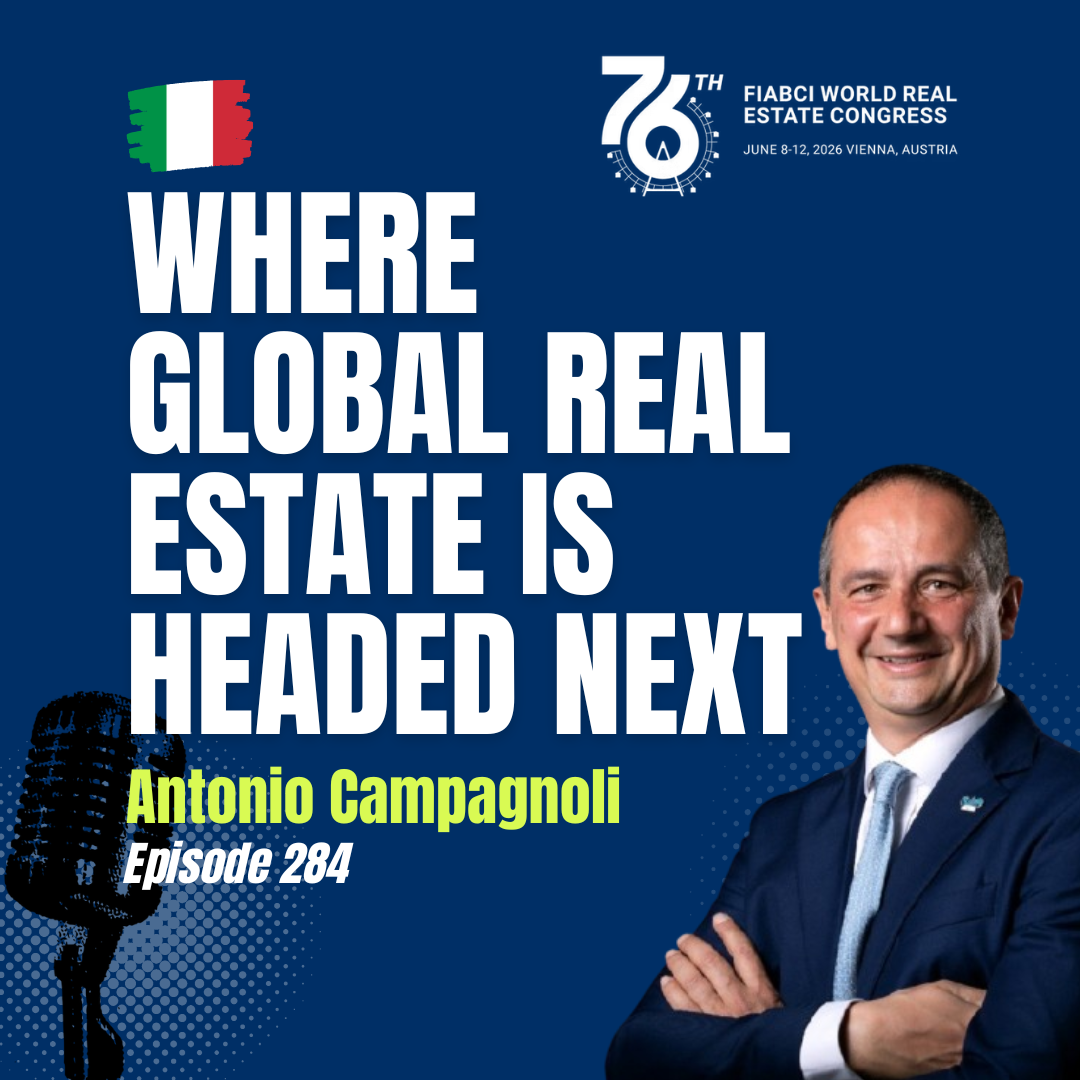
This article dives deep into the insights provided by Antonio Campagnoli, an Italian lawyer and global real estate leader serving as the World President of FIABCI for 2025–2026. Through his lens, we explore how the intersection of law, finance, and social responsibility is reshaping the property landscape, offering a roadmap for professionals navigating the complexities of modern investment.
Table of Contents
- The Power of a Global Real Estate Network: Connecting the Local to the International
- Redefining Social Housing: From Construction to the 5P Ecosystem
- Investing in Europe and Italy: Resilience, Tax Incentives, and Strategic Assets
- Innovation Born of Necessity: Lessons in Resilience from Ukraine
- Leadership and Continuity: The Path Toward the FIABCI World Congress
- Expert Guidance: Connecting with Antonio Campagnoli
The Power of a Global Real Estate Network: Connecting the Local to the International
For the modern real estate broker, success is often dictated by the strength of their connections. However, in a fragmented market, being "local" is rarely enough. The true value lies in a global real estate network that can bridge the gap between deeply rooted local expertise and international capital.
A Unique Multi-Professional Approach
Unlike many industry bodies, a comprehensive global real estate network like FIABCI integrates all stakeholders—developers, brokers, managers, valuers, architects, and lawyers. This cross-disciplinary collaboration is essential because real estate is no longer just about property rights; it is about managing complex systems that involve public policy, environmental compliance (ESG), and fintech innovation.
Antonio Campagnoli emphasizes that being "global as local" is a unique advantage. By participating in high-level discussions at the UN in New York or Geneva while simultaneously engaging with developers in Manila or Australia, a global network provides a "nectar" of connectivity that fuels business growth and policy influence.
The Broker’s Evolving Role
Real estate agents are no longer mere intermediaries; they are consultants within a vast global real estate network. They must understand how global trends—such as the migration of high-net-worth individuals or new European housing directives—impact their local listings. By leveraging international platforms, brokers can offer their clients more than just a property; they offer entry into a worldwide ecosystem of opportunity.
Redefining Social Housing: From Construction to the 5P Ecosystem
One of the most significant shifts identified in the source material is the evolution of social and affordable housing. For real estate investors, this sector is transitioning from a niche "charity" concern to a critical infrastructure asset, similar to highways, stadiums, or airports.
Beyond Square Meters: The Neighborhood Concept
The traditional model of social housing focused on providing a roof and basic amenities. Today, the focus has shifted to "living well" within a community. This includes the integration of sports centers, places of worship, and meeting spaces that foster social interaction. In Europe, where loneliness and social isolation are rising, the "manager of the co-quartier" has become as important as the building’s architect.
The 5P Model: A New Standard for Investment
To successfully deliver these complex projects, the industry is moving toward a "5P" partnership model:
- Private: Investors and developers bringing capital and efficiency.
- Public: Government entities providing land, policy, and infrastructure support.
- People: Community stakeholders involved in co-designing their neighborhoods.
- Policy: Regulatory frameworks that ensure sustainability and inclusivity.
- Partnership: The glue that binds these entities together for long-term success.
This model encourages what Campagnoli calls an "Urban Hackathon," where public and private players think together to solve housing crises. For investors, this reduces risk by ensuring community buy-in and long-term project viability.
Investing in Europe and Italy: Resilience, Tax Incentives, and Strategic Assets
The European real estate market remains a primary target for the global real estate network, despite current geopolitical tensions. The sources highlight several key reasons why investors should remain bullish on the continent, particularly Italy.
The Italian Advantage: High-Net-Worth Incentives
Italy has introduced strategic tax incentives to attract global capital. A "flat fee" system for high-net-worth individuals—ranging from €200,000 to €500,000—aims to motivate wealthy investors to relocate. This has created a "spillover effect" in regions like Milan and Lake Como (Bellagio), where wealthy residents sponsor local parks and refurbish public spaces, benefiting the entire municipality.
While some argue these incentives drive up prices, the sources suggest these investors participate in a "different market," often bringing with them an entourage of employees and significant ordinary expenditure that stimulates the local economy.
The Reality of "One-Euro Houses"
The famous Italian scheme of selling abandoned village homes for one euro is a popular topic within the global real estate network. However, Campagnoli warns that without coordination, this can lead to fragmented development where utilities like sewers and water pipes are neglected. The future of this trend lies in managed investment funds that buy multiple units to create "temporary ownership" models, ensuring the village remains alive 365 days a year.
Europe as a Safe Haven
Investors are increasingly looking for regions far from conflict. While Europe faces its own challenges, it offers a "free" fortune of history, moderate temperatures, and relatively low criminality compared to other global hubs. Furthermore, Europe is "empty" relative to its history and potential, with 400 million people in a territory capable of supporting much more, making it a prime candidate for strategic "Silk Way" harbor connections and health infrastructure investments.
Innovation Born of Necessity: Lessons in Resilience from Ukraine
The sources provide a moving account of the real estate landscape in Ukraine, demonstrating how extreme pressure breeds radical innovation. For the global real estate network, these lessons in resilience are invaluable for future disaster recovery and sustainable rebuilding efforts.
Technology and Rapid Construction
In cities like Bucha and Lviv, the focus has shifted to immediate human needs solved through innovative design, such as "house in the woods" straw panel constructions. These projects involve the community—even children—in the design and decoration process, fostering a sense of ownership and psychological recovery.
Furthermore, the integration of advanced medical facilities, like the "Unbroken" hospital in Lviv, shows how real estate can serve as a vehicle for societal healing. The use of drones for both defense and surveying highlights a shift toward tech-driven property management that will likely permeate the global real estate network in the coming decade.
Leadership and Continuity: The Path Toward the FIABCI World Congress
The strength of any global real estate network lies in its leadership. As Antonio Campagnoli prepares to pass the presidency to Lily Chang at the World Congress in Vienna, the focus remains on "collective leadership".
The Vienna World Congress: A Meeting of Markets
The upcoming World Congress in Vienna is described as a "multi-popped organization" where 26 board members from 26 different countries meet on equal footing. It is a venue where civil society, politics (UN Habitat, EU), and the private sector converge to discuss housing impact and investment structures. For brokers and investors, attending such events is not just a social activity; it is a strategic investment in "business and politics opportunity".
The "Script" of Leadership
Campagnoli views his role as an actor in a pre-drafted movie—a strategic plan that ensures the federation remains united and focused on long-term goals rather than individual egos. This "pure form of leadership" ensures that the global real estate network remains a sustainable ecosystem for all its members.
Conclusion: Embracing the Challenge
The message for the global real estate community is clear: be active. Success in the current market requires stepping out of one's house, trying new paths, and embracing the challenges of a globalized world. Whether it is navigating ESG compliance in Italy or investing in the next generation of social housing, the tools for success are found within the connections of a robust global real estate network.
Expert Guidance: Connecting with Antonio Campagnoli
To learn more about global real estate trends or to connect with leadership at the forefront of the industry, you can reach out to Antonio Campagnoli directly. As a founding partner of IL PUNTO Corfac International and an expert in fintech and ESG law, he remains a pivotal figure in the European property sector.
Contact Information:
Antonio Campagnoli – FIABCI World President 2025–2026
Note: This article draws upon insights from the "Global Leadership and the Future of Social Housing Ecosystems" interview session. For more information on upcoming events like the World Congress in Vienna, please consult the official FIABCI global real estate network portals.