Investing in the Future: The Definitive Guide to Quintana Roo for the International Real Estate Network
The Mexican Caribbean is no longer just a vacation destination; it has evolved into one of the most sophisticated and high-growth investment hubs on the planet. For the international real estate network, Quintana Roo represents a frontier where luxury meets sustainability, and where legal certainty is finally catching up with explosive market demand. Whether you are a seasoned broker looking to expand your portfolio or an investor seeking the next global hotspot, understanding the nuances of the 11 distinct destinations within this state is crucial.
Table of Contents
- The Evolution of Quintana Roo: From Tourism Project to Global Metropolis
- Sustainable Luxury: The 2025-2050 Vision
- Market Segmentation: From Cancún to the Emerging Smart Cities
- Legal Certainty and the Professionalism of the International Real Estate Network
- Infrastructure as a Value Driver: Tren Maya and Beyond
- How to Connect with the AMPI Global International Real Estate Network
The Evolution of Quintana Roo: From Tourism Project to Global Metropolis
Quintana Roo is a young and vibrant state, born from a visionary tourism project in 1970 known as Cancún. In just 54 years, it has grown exponentially, often outpacing urban planning budgets. Today, Cancún is a bustling metropolis of over 1.4 million residents, serving as the gateway to the Caribbean.
For members of an international real estate network, it is vital to recognise that Quintana Roo is not a monolith. It comprises 11 different destinations, each offering a unique lifestyle and targeting different investor profiles. While the turquoise waters remain a constant, the investment opportunities range from high-density luxury condos in Cancún to organic, handcrafted architectural wonders in Tulum.
Sustainable Luxury: The 2025-2050 Vision
The most significant shift in the Mexican real estate market is the transition from mere development to intentional sustainability. The state government recently unveiled the 2025-2050 Sustainability Plan, placing environmental preservation at the core of future growth.
This is not just a trend; it is a regulatory reality. In 2023, Mexico published its "Taxonomy of Sustainability," aligning the country with the Global Agenda 2030. For the international real estate network, this means projects are increasingly incorporating:
- Biophilic and Bioclimatic Design: Enhancing thermal comfort and sleep quality through natural integration.
- Ecological Technologies: Rainwater harvesting, bio-pools, and clean energy (solar and wind).
- Reduced Ecological Footprints: Focusing on how a project operates long-term, not just how it is built.
In destinations like Tulum, which is described as an "architectural museum," the focus is on "Wellness Tourism," where the biorhythms of the residents are harmonised with nature.
Market Segmentation: From Cancún to the Emerging Smart Cities
To provide value within an international real estate network, brokers must understand the specific "vocations" of each area:
1. Cancún: The Established Gateway
Cancún offers everything from $75,000 entry-level homes to multi-million dollar beachfront estates with private docks. The "Avenida Guayacán" and "Luis Donaldo Colosio" areas are currently the epicentres of urban and commercial growth, featuring massive new shopping centres and luxury residential towers.
2. Playa del Carmen: The 15-Minute City
Playa del Carmen has matured into a walkable, urban environment. Its current concept is the "15-minute city," where residents can access all essential services within a short walk or cycle. Investment products here often include "lock-off" studios near the beach, starting around $160,000, designed for the high-turnover rental market.
3. Tulum: The Architectural Frontier
Tulum remains a global brand, attracting "Branded Properties" like the Faena District. While it faces infrastructure challenges, new developments in areas like "Selvasama" offer underground services and master-planned security. Prices for luxury organic homes in this corridor can easily reach $3 million.
4. Puerto Morelos: The Emerging Smart City
As the youngest municipality, Puerto Morelos is benefiting from "learned wisdom," growing in a more orderly fashion than its neighbours. It is home to the first Smart Cities, such as Culcana, which spans 500 hectares and integrates with the Tren Maya route. Two-bedroom apartments here, located just 3km from the sea, average around $110,000, offering exceptional value-to-price ratios.
5. Cozumel: The Island Lifestyle
Cozumel is experiencing an unprecedented boom with over 15 new developments under construction. Known for hosting the Iron Man and world-class snorkeling, its properties are predominantly ocean-facing, with entry prices typically starting at $400,000.
Legal Certainty and the Professionalism of the International Real Estate Network
Historically, real estate in Mexico was viewed as a trade rather than a regulated profession. However, since 2014, Quintana Roo has enforced a Real Estate Services Law. Any professional operating within an international real estate network must hold a state-issued license (Matrícula Inmobiliaria).
The state's registry is managed by CEDETUS, and investors are strongly advised to verify their broker's name on the official public census. Furthermore, real estate is classified as a "vulnerable activity" under Mexican anti-money laundering and asset forfeiture laws, making professional oversight mandatory for secure transactions.
The Asociación Mexicana de Profesionales Inmobiliarios (AMPI), which will celebrate its 70th anniversary in 2026, serves as the primary body ensuring international standards. Working with an AMPI-certified broker provides a fiduciary guarantee that the interests of both the buyer and seller are protected.
Infrastructure as a Value Driver: Tren Maya and Beyond
Quintana Roo is currently the only state in Mexico with four international airports, providing unparalleled global connectivity. Significant "master re-evaluators" (infrastructure projects) are currently coming online:
- Tren Maya: Now operational in several sections, including Cancún-Mérida and Cancún-Playa del Carmen, it connects the Caribbean with the wider Mayan world.
- Tulum Airport: Enhancing direct access to the southern Riviera Maya.
- Nichupté Bridge: A massive project in Cancún designed to revolutionise mobility between the hotel zone and the mainland.
These projects ensure that the 12% average annual appreciation reported by INEGI remains sustainable.
How to Connect with the AMPI Global International Real Estate Network
For international brokers, the international real estate network facilitated by AMPI Global is the key to entering the Mexican market safely. Even brokers based outside of Mexico can affiliate with the AMPI Global Committee for a $50 annual fee.
Benefits of joining this international real estate network include:
- Commercial Missions: Organized tours for brokers and clients to explore specific regions.
- CCIE Training: Access to the Center for Training, Research, and Statistics to learn the specific legal "translation" of how to buy and sell in Mexico.
- Referral Systems: Connecting with local experts who hold the necessary licenses and localized market knowledge.
Conclusion: A Call to Conscious Investment
The future of Quintana Roo lies in "conscious governance"—starting with the individual investor and the professional broker. By prioritizing sustainable luxury real estate and legal transparency, we ensure that Quintana Roo remains a paradise for the next 50 years. For the international real estate network, the message is clear: the opportunity is immense, but it must be navigated with professional, licensed guidance.
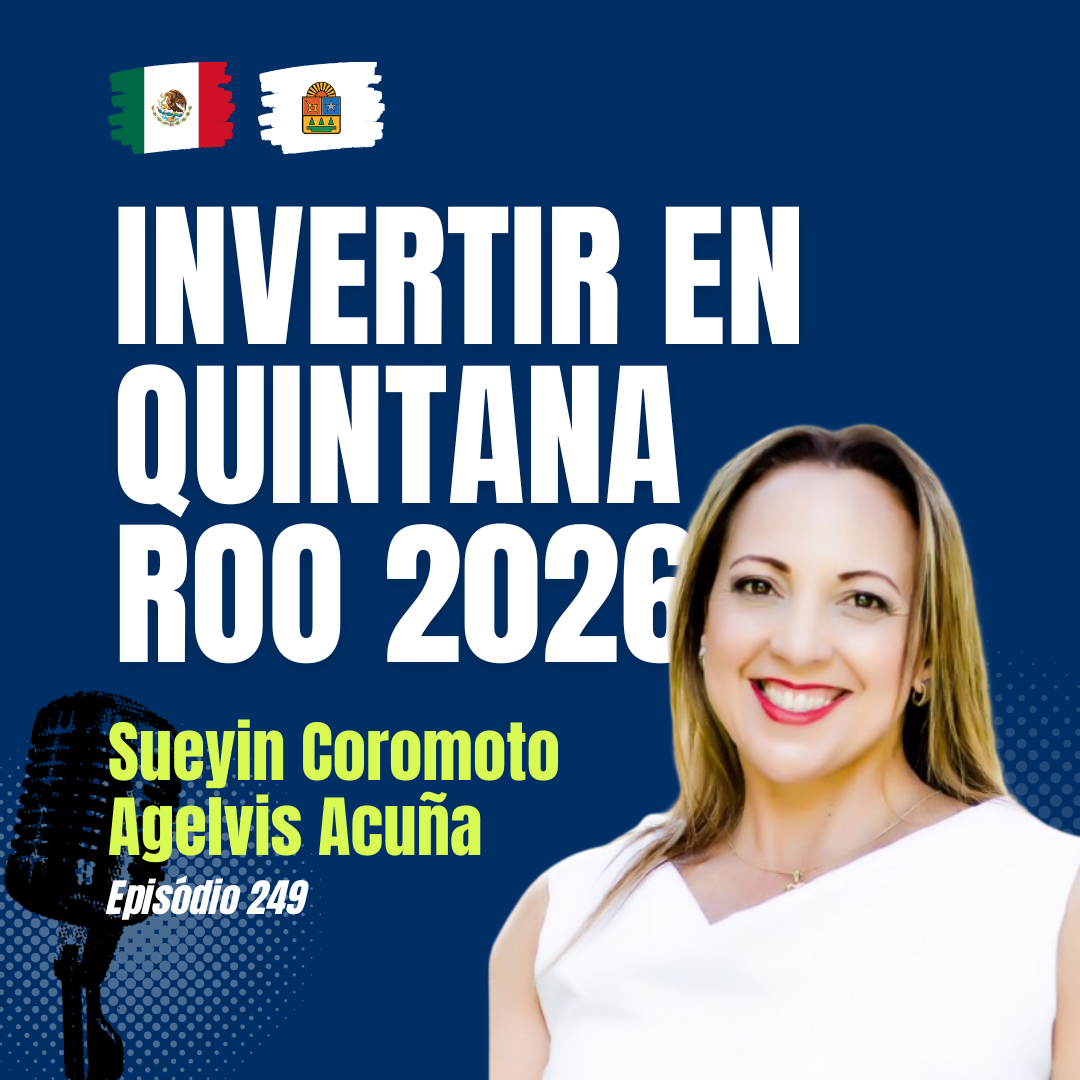
Article curated by Sueyin Coromoto Agelvis Acuña, Luxury Real Estate Specialist and Certified Consultant in the Riviera Maya.