Investing in Luxembourg Real Estate: Market Secrets and the Power of a Global Real Estate Network
For the elite real estate investor and the forward-thinking property broker, the European market often feels like a puzzle of varying regulations and shifting economic tides. However, one destination consistently rises to the top as a beacon of stability and high-value returns: Luxembourg. As a "niche market" with a "really high level real estate industry," Luxembourg is currently ranked as one of the top three real estate markets in all of Europe.
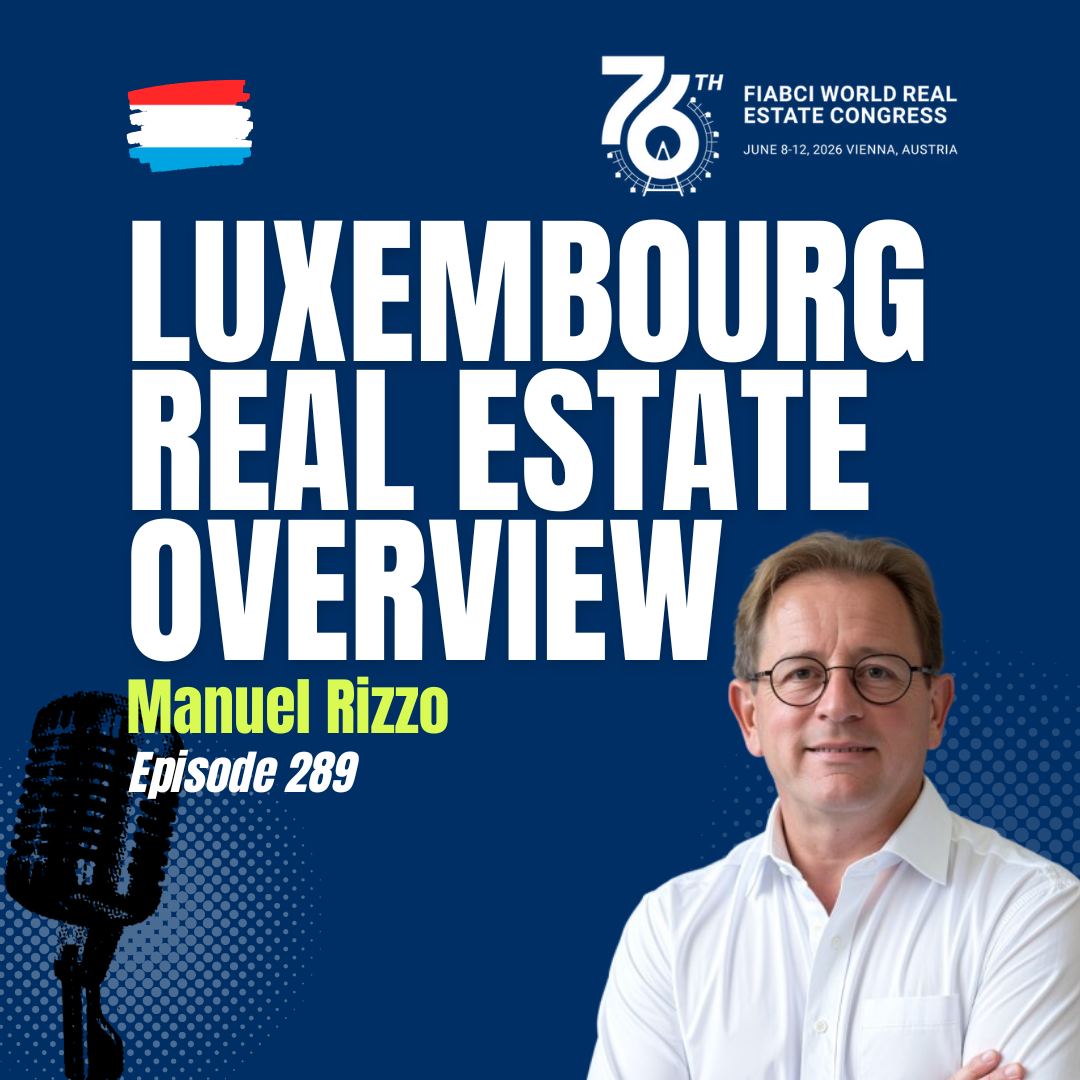
To truly understand the nuances of this exclusive territory, we look to the insights of Manuel Rizzo, a seasoned professional with over 25 years of experience and a central figure in the global real estate network. As the President of FIABCI Luxembourg and a board member for both the International Real Estate Federation (FIABCI) and the European Association of Real Estate Professions (CEPI), Rizzo offers a unique perspective on why Luxembourg is the ultimate destination for portfolio diversification.
Table of Contents
- Why Luxembourg is a Real Estate Powerhouse
- The Strategic Advantage of a Global Real Estate Network
- Navigating the Regulatory Landscape: AML, KYC, and Foreign Access
- The Evolution of the Broker: From Sales to First-Class Service
- Essential Numbers: Transaction Costs and Financial Vehicles
- Looking Ahead: The 76th FIABCI World Congress in Vienna
Why Luxembourg is a Real Estate Powerhouse
Luxembourg is frequently overlooked in global listings due to its small size, yet it boasts some of the highest rents and property values on the continent. In the heart of Luxembourg City, investors are looking at prices ranging between €10,000 and €16,000 per square meter. Even major hubs like Frankfurt, London, and Paris often fall under these price points.
For those looking for entry points with lower capital requirements, the areas surrounding the city and near the German border offer significant value. In these regions, prices can be 20% to 40% lower than in the capital, with a standard two-bedroom apartment costing approximately €800,000 compared to €1.1 million in the city center.
The Strategic Advantage of a Global Real Estate Network
In today's interconnected market, being a lone wolf is no longer a viable strategy for brokers or investors. Manuel Rizzo emphasizes that the global real estate network provided by organizations like FIABCI is "amazing not only just for selling properties around the world but also to have a sharing of knowledge".
A comprehensive global real estate network allows professionals to:
- Identify what international investors are looking for before the trends hit the local market.
- Access a multicultural community—essential in Luxembourg, where 47.4% of the population is foreign.
- Leverage high-level connections with the UN; FIABCI is the only private association with a deal with the United Nations headquarters.
Rizzo argues that when joining a trusted global real estate network, the question shouldn't be what the network can do for you, but "what can I bring in the network," such as your specific values and local knowledge. This collaborative approach eventually facilitates "real estate shopping around the world" through established, trusted contacts.
Navigating the Regulatory Landscape: AML, KYC, and Foreign Access
One of the most attractive features of the Luxembourg market is the lack of restrictions on foreign buyers. "Everybody can buy in Luxembourg," Rizzo confirms. However, this accessibility comes with a rigorous commitment to transparency and professionalism.
The primary hurdle for any international investor is the "due diligence" process, specifically regarding Anti-Money Laundering (AML) and Know Your Customer (KYC) requirements. Because Luxembourg is home to the second-largest fund industry in the world, the local authorities often implement stricter AML laws than the baseline requirements set by the European Commission in Brussels. For investors with "nothing to hide," the process is straightforward, though it requires meticulous documentation.
The Evolution of the Broker: From Sales to First-Class Service
For real estate agents, the most provocative insight from Manuel Rizzo is his prediction regarding the profession's survival. He believes the role of the broker "as we knew it decades before will completely change" and may even "disappear in the next 10-15 years" due to the rise of AI and large corporate takeovers.
The Shift to a Service Provider Model
To survive, the modern broker must transition into a "service provider". Rizzo is already implementing this at his firm, Riman Immobilier, by hiring staff specifically for home care services, including cleaning and gardening. The goal is to provide a "first-class service" that builds such deep trust that clients return for every transaction without the need for traditional advertising.
The Importance of Education
Professionalism must be backed by education. Rizzo has been a driving force in creating the Real Estate Academy in Luxembourg and the BTS Immobilier (a high school diploma for real estate) to ensure that brokers are not just "unregulated" practitioners but highly educated professionals who protect the consumer.
Essential Numbers: Transaction Costs and Financial Vehicles
For investors calculating their ROI, understanding the entry costs is vital. In Luxembourg, the registration fee is fixed at 7%, which goes to the government. Notary fees are generally just under 1%. Interestingly, while the law changed in 2004 to allow both parties to negotiate fees, it is still the cultural "mind of the people" that the seller pays the agency commission.
Furthermore, Luxembourg is an ideal hub for creating "financial vehicles". Investors are encouraged to establish their vehicle in Luxembourg first, utilizing the country's sophisticated banking landscape to then acquire properties globally through a connected global real estate network.
Looking Ahead: The 76th FIABCI World Congress in Vienna
The future of the global real estate network will be on full display from June 8 to 12, 2026, at the 76th FIABCI World Congress in Vienna. This event serves as a historic gathering for "thinkers and arts," where top speakers from politics, academia, and business will converge to shape the next decade of property investment.
For those looking to expand their reach, Rizzo—who will be running for the Vice Presidency of FIABCI—notes that Vienna is one of the most beautiful cities in Europe and the perfect place to see the power of a global network with one's "own eyes".
Connect with the Expert
If you are looking to navigate the Luxembourg market or want to learn more about high-level property lobbying in Brussels, you can reach out to Manuel Rizzo directly.
Contact Manuel Rizzo: LinkedIn Profile
Visit the Website: Riman Immobilier